Thrombotic microangiopathies (TMA)

The term thromobitic microangiopathy (TMA) encompasses a group of conditions that are defined by, or result from, a similar histopathological lesion. Hemolytic uremic syndrome HUS), thrombotic thrombocytopenic purpura (TTP) and…

Applications of Complement Regulators

See also specific diseases for references to CRegs  and Drug Targetting under Pharmacology CRegs for the Treatment of Diseases CR1: Levin (US 6,169,068) teaches a method for treating diseases involving complment by…

Regulation of the complement system

See also Applications of Cregs:  Complement Receptor 1 (CR1; CD35; C3b/C4b receptor): is present on erythrocytes, monocytes/macrophages, granulocytes, B cells, some T cells, splenic follicular dendritic cells and glomerular pdocytes. CR1…

Regulation of the complement system

See also complement inhibitor targetting under "Pharmacology" and "Drug delivery" See also Human Complement Regulatory Proteins (CRegs)  See also disease mechanisms of viruses and bacteria for how pathogens use complement regulatory proteins to evade the…

Complement Assays

Various assays/methods can be used to mesasure activities of complement pathway molecules and activaiton of the complement system. (see US Patent No. 6,087,120 and Newell, J Lab Cin Med, 100:437-44,…

C3 & C5

C3a and C5a (below) are anaphylatoxins which can trigger mast cell degranulation, which releases histamine and other mediators of inflammation, resulting in smooth muscle contraction, increased vascular permeability, leukocyte activaiton,…

Lectin pathways

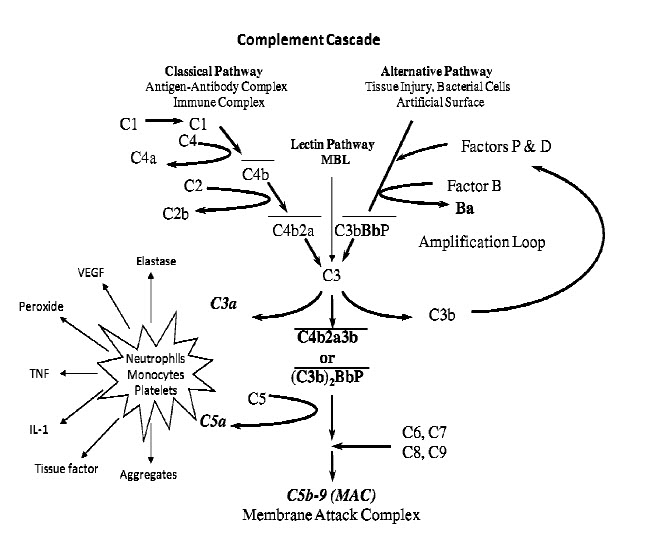
Overview The Lectin pathway is initiated by mannan-binding lectin (MBL) which is a protein that binds specifically to mannose residues in bacterial cell walls. It is a phylogenetically ancient mechanism which was first shown…

Classical pathways

See also Fc receptors under signal transduction The classical pathway is is a major effector of the humoral branch of the human immune response. the CP is typically triggered by…

Alternative pathways

Overview The AP is responsible for 80-95% of total complement activity. The AP is a complement activation pathway which is triggered by artificial surfaces such as LPS from Gram negative…